Nigerian equities emerge world’s top dollar-return stock market
Nigeria’s benchmark equity index has returned 67% in dollar terms this year, according to Bloomberg data cited by Punch Newspapers. That places Nigerian equities ahead of South Korea’s Kospi at 66%, across 92 global stock exchanges tracked by Bloomberg.
Gareth Hopkins·updated July 10, 2026
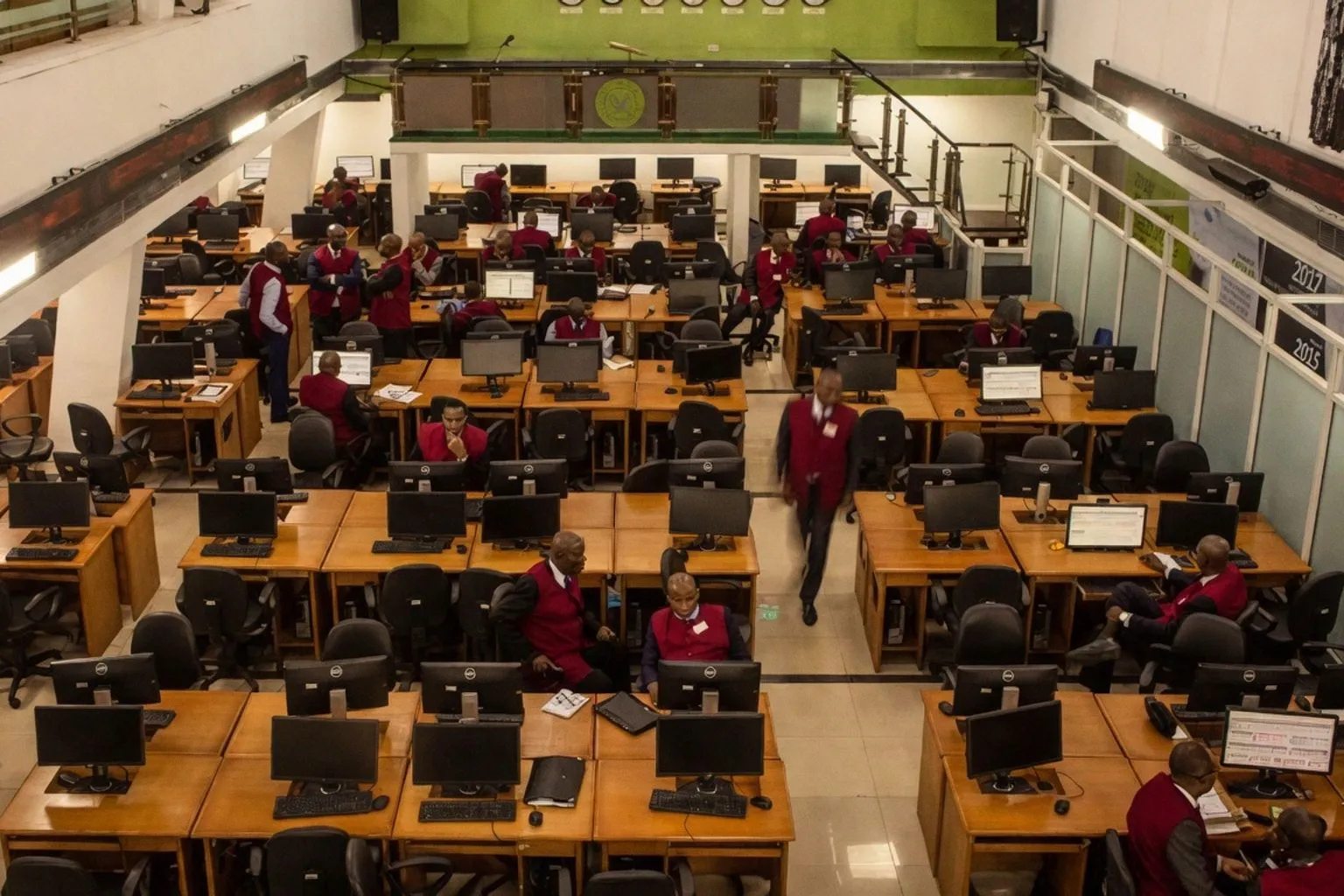
Dollar return, not local-market noise
The reported move is a currency-adjusted leaderboard event. Nigeria has moved to the top of Bloomberg’s global equity-market table in dollar terms after South Korea’s rally lost momentum.
Key reported inputs:
- Nigeria benchmark index: 67% dollar return year-to-date.
- South Korea Kospi: 66% dollar return before the latest reversal.
- Sample: 92 global stock exchanges tracked by Bloomberg.
- Naira: up 4% against the dollar since January.
- South Korean won: down about 5% against the dollar year-to-date.
- Kospi: down 22% from its June 19 peak, meeting the technical bear-market threshold.
The dispersion is therefore a combined equity-and-FX result. Nigeria’s equity gains were amplified by a positive currency contribution. South Korea’s return profile was compressed by won depreciation and a drawdown in AI-linked sentiment.
The relative spread is narrow: 100 basis points between Nigeria’s reported 67% and the Kospi’s 66%. But the path dependency differs. Nigeria’s move is tied in the report to macroeconomic reforms, higher international crude oil prices and improved foreign-exchange liquidity. South Korea’s reversal is tied to questions over the durability of the artificial-intelligence trade.
Sector composition explains the factor split
The Nigerian rally is not an AI-proxy trade. Bloomberg, as cited by Punch, noted that companies listed on Nigeria’s exchange are not directly exposed to artificial intelligence. That distinction matters for index-factor decomposition.
Financial services firms on the Lagos-based exchange have led the gains in the benchmark index. One reported outlier is Fortis Global Insurance Plc, with a 1,400% dollar return. The figure is extreme and should be treated as single-stock dispersion rather than broad-market normality.
The Nigerian case is therefore closer to a reform-liquidity-FX basket than to a semiconductor or hyperscaler basket. The reported drivers are:
- macroeconomic reforms;
- higher crude oil prices;
- improved foreign-exchange supply;
- stronger naira;
- investor expectations around a potential Dangote Petroleum Refinery listing.
That last variable remains an expectation, not a confirmed listing event in the supplied evidence. It is relevant because large domestic listings can alter index depth, foreign participation and liquidity concentration. It is not yet an index input.
Global comparison: old-economy beta is still pricing
The Nigeria result sits inside a broader rotation pattern visible in other reported market leaders. The Globe and Mail reported that Canada’s stock market has gained nearly 55% over two years after inflation, ranking among the strongest two-year rallies in history. It also noted that the TSX move has been led by banks, insurers, pipelines, gold, oil and utilities, rather than AI megacaps.
That is a useful comparator. Nigeria’s top ranking is not an isolated rejection of the global AI trade, but it does show that non-AI markets can still generate top-quartile dollar returns when currency, liquidity and sector mix align.
Other supplied snippets point to continuing attention on chip-market capitalization: TSMC was reported by Stocktwits as moving closer to a $2 trillion market cap as chip stocks rebounded, while Investing.com Canada flagged Intel and Arm among market-cap stock movers. Those items do not change the Nigeria ranking, but they frame the competing factor set: AI hardware momentum versus reform-linked and commodity-linked equity markets.
The practical pivot is the dollar-return denominator. For global allocators, the Nigerian signal is not the local index alone. It is the combined return stack of equities plus naira plus liquidity access. A reversal in any one leg would change the ranking faster than headline index performance suggests. Current confirmed level: Nigeria leads at 67% dollar return; the immediate comparison band is South Korea at 66%.