US stock market hits record $81T, now accounts for 48% of global market cap
U.S. equity market capitalization is reported at approximately $81 trillion, or 48% of global equity value, according to Bloomberg Finance LP and Deutsche Bank Research data cited by The Kobeissi Letter and reported by Crypto Briefing.
Gareth Hopkins·updated July 06, 2026
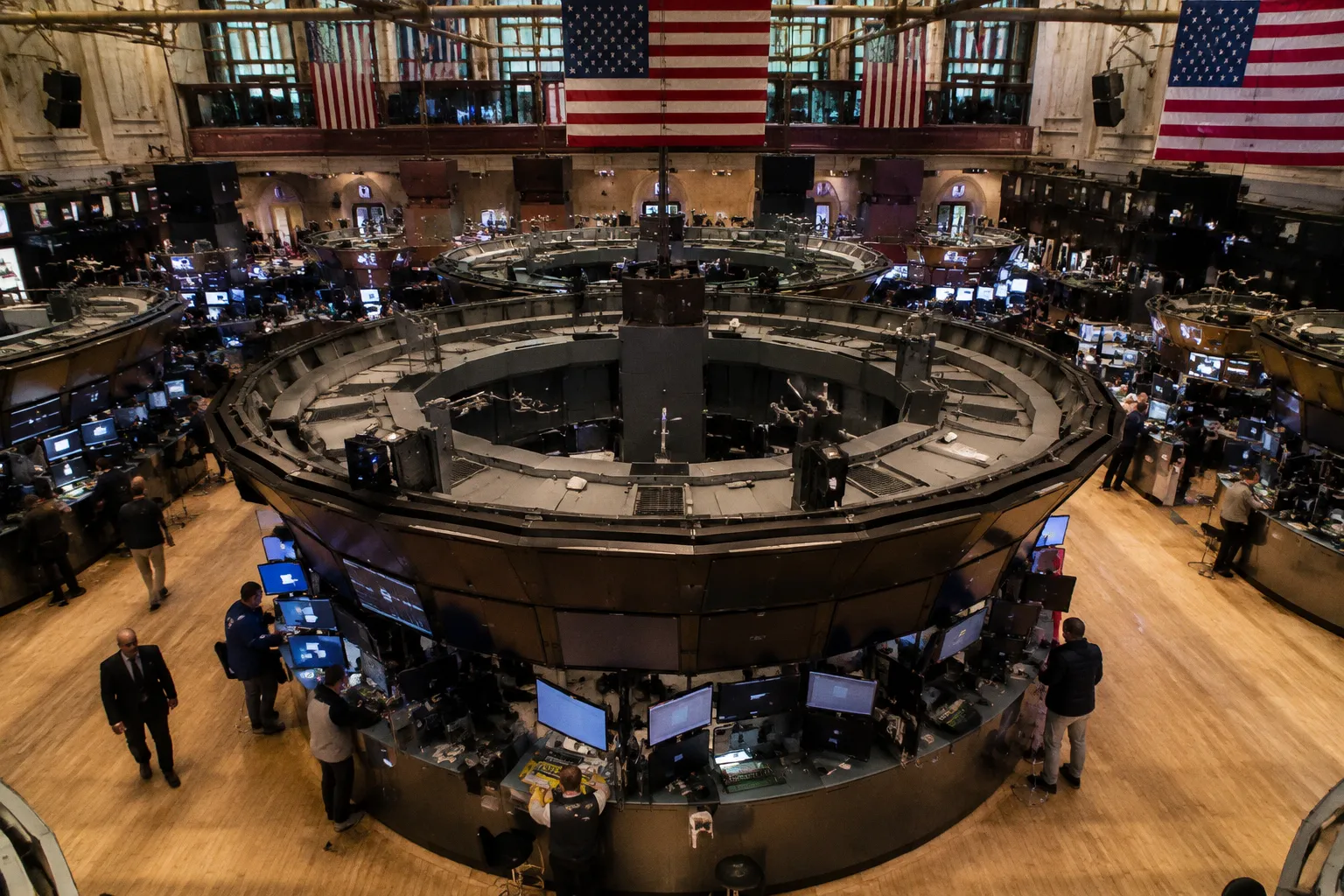
Capital share moved by 12 trillion dollars
The reported change is mechanical and large. U.S. market capitalization stood near $69 trillion on January 1, 2026, and has added roughly $12 trillion in about six months. That is a 17.4% increase on the cited starting base.
Key ratios from the reported data:
- U.S. equities: approximately $81 trillion.
- Global equities: approximately $167 trillion.
- U.S. share: 48%.
- China equity value: approximately $17 trillion.
- U.S. market size versus China: about 4.8 times, or roughly 375% larger on the source’s formulation.
Crypto Briefing also reports that the U.S. market now exceeds the combined equity markets of China, Japan, Hong Kong and Taiwan. That places the current U.S. weight above a major Asia equity bloc, not just above any single non-U.S. market.
For global allocators, this is not a marginal index-weight adjustment. It changes benchmark exposure by default. Passive portfolios tied to global market-cap indices become more U.S.-centric as the U.S. capitalization share rises. Active portfolios that remain underweight U.S. equities now carry a larger active risk budget against global benchmarks.
Mega-cap concentration is the transmission channel
The source attributes a major part of the concentration issue to the “Magnificent 7” mega-cap technology group: Apple, Microsoft, Nvidia, Amazon, Alphabet, Meta and Tesla. It reports that their combined market capitalization exceeds the total equity value of China.
That is the relevant portfolio fact. Seven U.S.-listed companies now represent a capitalization block larger than the world’s second-largest economy’s equity market, based on the cited figures. The implication is not valuation certainty. It is index sensitivity.
When a small set of stocks dominates index capitalization, broad-market returns become less broad. S&P 500 exposure, and by extension global equity exposure, becomes increasingly sensitive to the same large-cap technology cohort. The source notes that U.S. equity markets are approaching multi-decade highs in concentration within the largest firms.
The practical read-through is simple:
- Global equity beta has a higher U.S. component.
- U.S. equity beta has a higher mega-cap technology component.
- Geographic diversification provides less diversification if the benchmark’s largest weights share the same capitalization driver.
- Rebalancing bands should be checked against actual look-through exposure, not only fund labels.
The Economic Times separately reported that India topped Taiwan to reclaim fifth place in global market capitalization. That reinforces the ranking churn below the U.S. tier, but it does not alter the primary statistic: the U.S. share is reported at nearly half of global equity value.
What to monitor next
The first level is the 48% global share. Above that line, global equity concentration remains elevated by the reported measure. Below it, mean reversion in U.S. share becomes the key question.
The second level is the $81 trillion U.S. market-cap mark. If the figure holds, the $12 trillion year-to-date increase remains embedded in benchmark weights. If it reverses, passive global portfolios will transmit that drawdown through their U.S. allocation automatically.
The third level is relative scale versus China’s reported $17 trillion equity value. At about 4.8 times, the U.S.-China equity-cap ratio is the cleanest cross-market concentration metric in the data set.
No policy conclusion follows from the figures alone. The data indicate allocation pressure, not a timing signal. The operative threshold is technical: sustained U.S. capitalization near 48% of global market value keeps global equity risk structurally tied to U.S. large-cap performance.