Macroscope | How AI is both a boon and a bane for Hong Kong’s stock market
Q2 2026 fundraising proceeds in Hong Kong’s equity market reached their highest quarterly level in five years, per Bloomberg data.
Gareth Hopkins·updated July 06, 2026
Capital Inflow and Sectoral Fragmentation
Hong Kong maintained its position as Asia’s top fundraising venue. The Q2 proceeds peak was driven by a surge in share sales, including listings, placements, and block trades. This capital activity is bifurcated. A significant portion is directed towards entities aligned with Beijing’s AI strategic ambitions. Simultaneously, the broader market exhibits statistical anomalies, with substantial portions of the equity index failing to participate in this capital rotation.
The AI Thematic: Performance Dispersion
The AI trade has exposed structural gaps. Performance dispersion is extreme. Index constituents directly linked to AI infrastructure, semiconductor supply chains, and mainland technology policy have captured a disproportionate share of gains and new capital. Mean reversion pressures are building in over-extended segments of this thematic. Conversely, vast swathes of the Hong Kong equity universe, particularly in financials, traditional industrials, and property, are exhibiting negative relative strength versus the global benchmark. The 12-month rolling standard deviation between the top and bottom quintiles of performance is at a multi-year high.
Technical Pivot and Probability Assessment
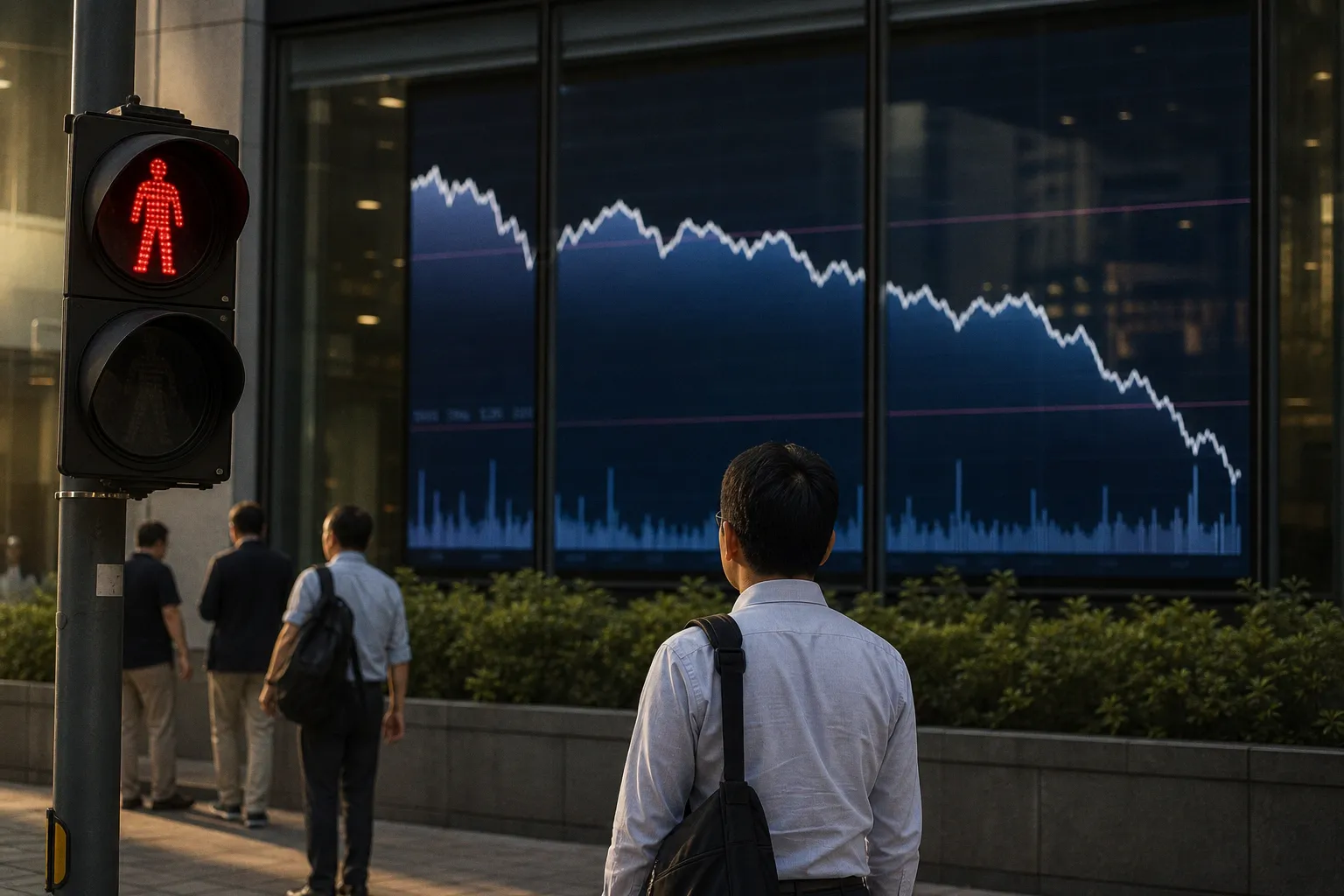
The Hang Seng Index (HSI) is trading below its 200-day simple moving average, a key technical pivot. A sustained break below the 18,500 level would increase the probability of a retest of the 2024 lows by approximately 35-40%, based on historical volatility patterns. Upside momentum is contingent on the AI-linked cohort holding its gains and a mean reversion in the underperforming sectors. The basis point spread between the forward P/E of AI-focused constituents versus the broad index is at a historic extreme of 150%, a level historically associated with increased rotation risk. The data dictates a high-variance, two-tiered market structure.