Rising Volatility and Geopolitical Risks Impact Global Equity Markets
TechStock² also reported a planned 50% duty on some Canadian products.
Gareth Hopkins·updated July 26, 2026
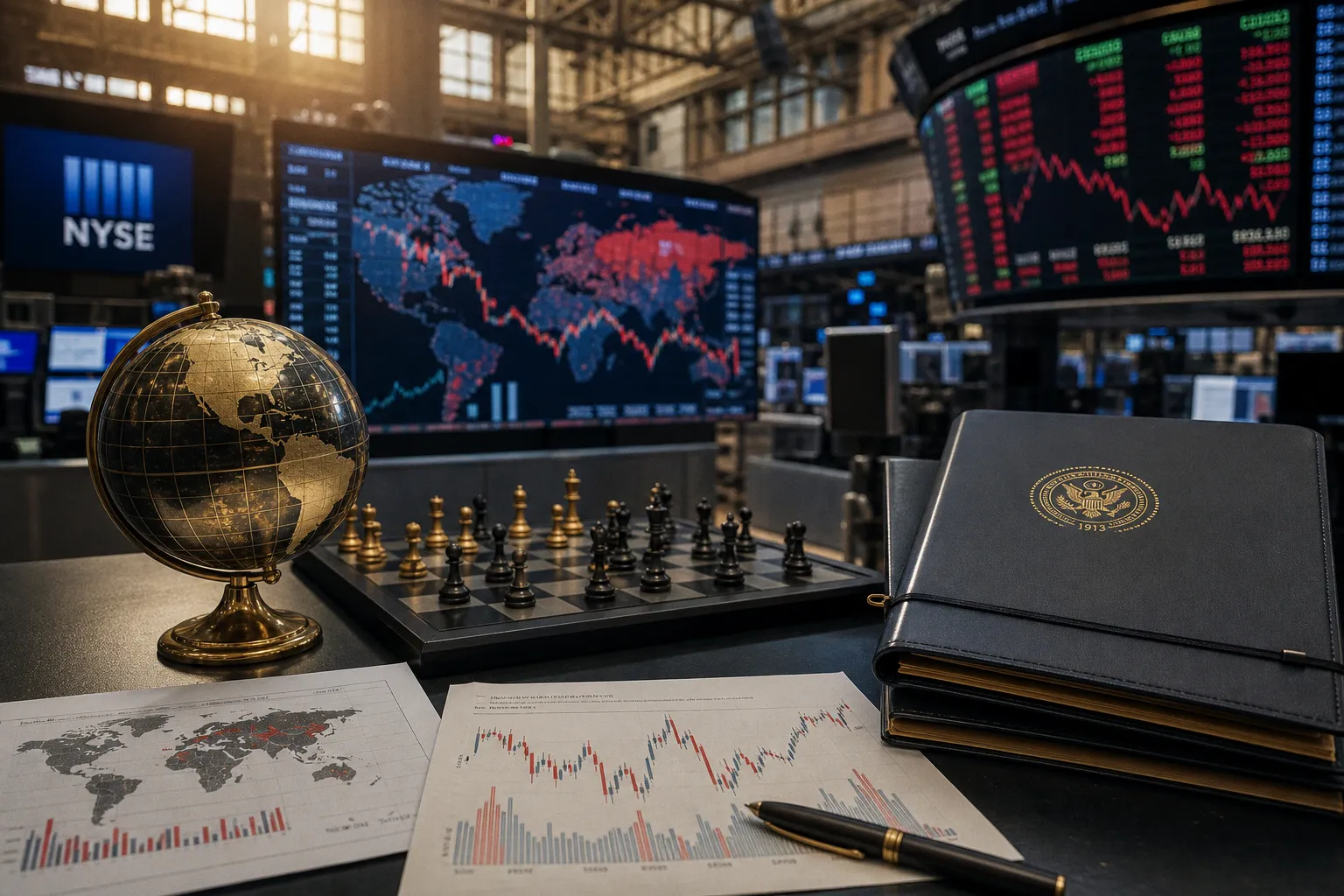
According to TechStock²’s live-market feed, the S&P 500 was reported 0.79% lower in July, while the CBOE Volatility Index rose to 18.7 from a June average of 17.91. The data point is not a broad cross-market close, but it identifies a higher-volatility regime for equity risk. The feed attributes the move to renewed Strait of Hormuz blockade tensions and planned tariff measures.
Volatility input: 18.7 versus 17.91
The VIX reading was 0.79 points above its June average, a 4.4% increase. That is the principal quantified change in the available update.
The source presents tariffs and Iran-related tensions as concurrent sources of potential equity-market variance. Neither the feed nor the available source material provides sector-level index performance, Treasury yields, FX moves or a dated policy implementation schedule.
For allocation purposes, the relevant distinction is between an index decline and a sustained expansion in implied volatility. The available data confirms the first for July and indicates the second through the VIX comparison. It does not establish a trend reversal, an earnings-cycle effect or a cross-asset correlation shift.
Semiconductor positioning remains a two-sided flow
Taiwan securities-lending data provide a separate measure of positioning. Finance.biggo.com reported that, as of July 20, the value of securities-lending balances across the 30 largest Taiwan-listed companies exceeded NT$36.6 trillion. The number of shares on loan was reported at 3,071,886 lots, against 3,047,221 lots on July 17.
The source placed the market value of those balances at about NT$367.44 billion. TSMC accounted for NT$60.59 billion, or roughly one-sixth of the top-30 total. The reported figure was NT$60.28 billion three trading days earlier.
AI-related assembly names also remained material in the lending market:
- Hon Hai Precision: NT$8.83 billion, versus NT$8.87 billion previously.
- Quanta Computer: NT$8.98 billion, versus NT$8.9 billion previously.
- Shin Kong Financial: NT$6.4 billion.
- China Development Financial: NT$6.34 billion.
- Evergreen Marine: about NT$4.66 billion.
- Taiwan Cement: about NT$4.55 billion.
Higher securities-lending balances are a positioning and hedging indicator. They are not a directional price forecast. The incremental change in total loans was 24,665 lots over the cited interval, while individual balances were mixed. That weakens any simple read-through from aggregate borrowing to a uniform bearish signal for AI equities.
Data to monitor next
The available reports point to two measurable inputs: implied US equity volatility and Taiwan semiconductor-related lending balances. The next useful confirmation would be whether the VIX holds above its June mean and whether lending balances in large AI-linked names continue to expand.
Macro risk should also be monitored beyond market screens. A weather system that left one million North Americans without power is a separate operational-risk event, not evidence of an equity-market effect in the supplied data.
Current technical pivot: VIX 17.91, the cited June average. A persistent reading above that level would maintain a higher implied-volatility baseline; the available evidence does not support a probability estimate beyond that condition.